This became critical when the security forces tried to clear blocked highways, to which serious confrontations occurred, and disruption was carried out on a large scale. The eyewitnesses also noted a lot of tear gas shelling, baton charges, and arrests. Since then, the tension has extended to the surrounding districts causing an apprehension of more demonstrations and unrest in Punjab.
- The protest over TLP became violent due to the police action.
- Muridke city turned out to be the focus of political opposition.
- The government employed the use of tear gas and forces to clear the streets.
- Highways and urban streets were temporarily closed.
- The anxiety among the people is still in place as tensions are on the rise in the region.
Police Operation and Fights
The police operation commenced early in the morning when the police went on to evict TLP Protests Pakistan who spent the night camping at the intersection of the GT Road and Muridke. The operation was opposed by the protesters who brought party flags and shouted religious slogans leading to direct confrontations with the police.
- Police were opposed to evacuation by supporters of TLP.
- Dozens of arrests were achieved in the course of the operation.
- They used heavy tear gas and there were injuries as reported by eyewitnesses.
- Medical aid camps were established concerning the wounded.
Response and Leadership Statements of TLP
After the crackdown, TLP leadership has heavily criticized the police action terming it as the state force against peaceful protestors. Party leaders made a promise in a public statement to hold on with their movement until their demands were met. The party claimed that the government was not keeping her word, and it was stifling the right to protest. TLP also encouraged its laborers all over the country to be non-violent yet resist oppression. The group demanded that the government policies should be reviewed because they feel that they have been discriminating against the religious activists.
- TLP condemned the crackdown as illegal and unreasonable.
- Leaders were insisting on their constitutional right to protest.
- The party encouraged the people to stay composed but not divided.
- TLP complained that the government was violating earlier agreements.
- A call to a nationwide peaceful protest was given.
The Position of Government and Law Enforcement
In its turn, the government officials justified the police action by the need to protect law and order. The police assert that protestors had opened up important highways and disrupted transport and emergency service. The Punjab Home Department said that talks had been made but they had not materialized because of the unrealistic demands of TLP. Law enforcement agencies reinforced how they were determined not to have chaos but instead their duty is to keep the rights and safety of the citizens intact.
- Officials justified the operation by saying it was a necessity to maintain law and order.
- Traffic and business were interfered with due to road blockages.
- Government alleged that TLP had rejected peaceful talks.
- Punjab Home Department ratified previous dialogues.
- Security forces promised to restrain and remain on watch.
Popular Response and Social Effect
Reactions of citizens and civil society were divided with regard to crackdown. Some of them felt that a firm action should be taken against road blockages, but some others complained that too much force was used. Shop owners in Muridke and other neighbouring localities were affected by loss of businesses because of shut down shops and interrupted transport. Hashtags of the similar nature like #TLPProtest and #MuridkeClashes were used on social media hours being reflected with the anger and concern of people. Analysts alert that a prolonged unrest could destroy the trust of the people on the government and the law enforcement agencies.
- The crackdown is subject to divided opinion among the people.
- Local companies have suffered massively in terms of finances.
- Commuters and supplies were disrupted due to transport problems.
- The social media increased national responses and discussions.
- Specialists are worried about the further deterioration of trust between the citizens and the state.
Political Consequences and Reaction of Opposition
The event has caused a new wave of politics in Pakistan. The opposition parties have demanded that the Muridke crackdown be investigated immediately citing that the government has been mismanaging the situation. Individual political leaders showed their support to the right of the TLP to protest and encouraged both groups to engage in non-violence. Analysts think that this clash may transform the political landscape in Punjab, particularly in the run up to new elections.
- The opposition parties insisted on an unbiased investigation.
- Revision was directed at the aggressive nature of the government.
- Analysts make predictions regarding political outcomes in the long term.
- The number of public rallies can grow in the next few weeks.
- The provincial and national politics may be affected by the crisis.
Security Response and Regional Readiness
Intelligence services are in good tracking of the online activities and mobilization activities going on by TLP in the region. Authorities said that more security guards have been stationed in sensitive places in order to prevent increased deterioration.
- Crackdown tightened the security in the main Punjab cities.
- Roadblocks established by the police.
- Intelligence services monitoring TLP mobilization patterns.
- Special troops in risky areas.
- Government is to suppress the unrest as fast as possible and without violence.
Prospects and Probabilities of Dialogue
Political observers are of the opinion that dialogue between the government and the leaders of TLP still exists though tension is on the rise. Experiences of the past have demonstrated that negotiations, despite its intricacy, can be avoided leading to escalation. Analysts propose that a middle-ground stance of taking into consideration the public concerns but ensuring security may calm down the situation. The further unrest can also damage the image and economic restoration of Pakistan without dialogue.
- It can still be a dialogue provided that both parties are flexible.
- History of negotiations has aided in curbing protests all over the country.
- Researchers encourage a combination of soft diplomacy and decisiveness.
- One might pressurize the two sides to enter into negotiations.
- Peaceful resolution is critical in national stability.
Rampant Disturbance at Muridke
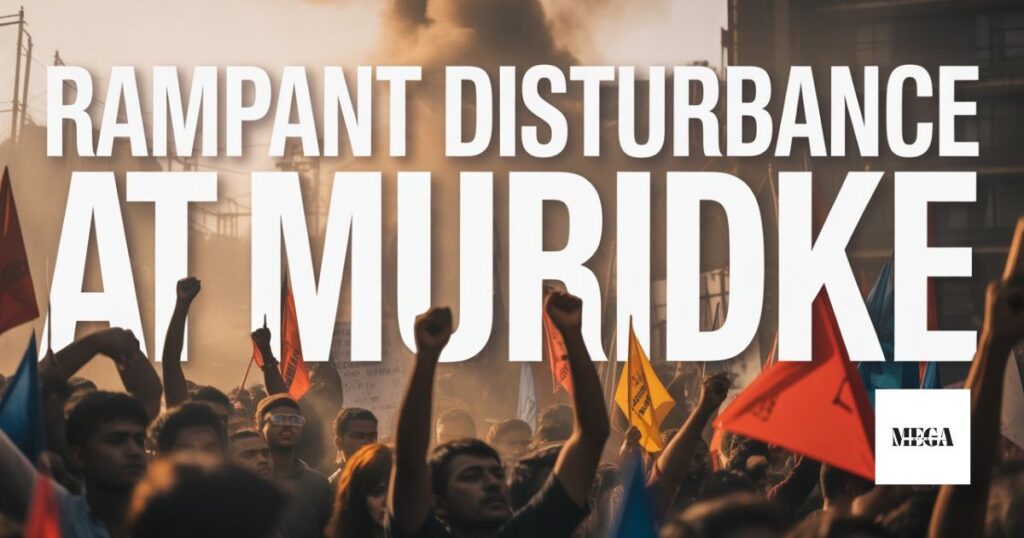
A confrontation between demonstrators and police officers led to anarchy, and there were reports of injuries, arrests in various sources. Observers reported tear gas, charge of batons and blockades when security forces tried to restore order. The non-violent protest went violent when the protesters refused to vacate the roads until the party members detained were released and the reforms to the religion introduced. Businesses within the location closed early and there was fear of escalation as all forms of public transportation were cancelled.
- Crowds were dispersed with the help of tear gas and batons.
- TLP Protests Pakistan insisted that detained workers should be released.
- Transport and trade routes were blocked.
- The local population had problems with commuting to workplaces.
- The level of security in Muridke is still highly amplified.
Government Position and Controlling Policies
After the confrontations, the government officials said that the crackdown was needed to ensure the law and order. The government accused TLP of instilling violence and obstructing major highways, which endangered the lives of citizens. According to the police sources, dozens of protesters were arrested, some were injured in the process of resisting. To avert further unrest, the Punjab Home Department sent out more forces in the major districts. In the meantime, the government pointed out those peaceful demonstrations was a constitutional right but there would be no tolerance of the interference with the normal life and destruction of property. Political analysts observe that the reaction is an indication that the administration is determined to ensure that things are stable in the run-up to the next religious meetings.
- Government defended the crackdown as being lawful.
- Other police units dispersed to Punjab.
- Violence’s and property destruction were alleged by protesters.
- Official sources are reported cases of arrests and minor injuries.
- Any attention is paid to the restoration of calm prior to major events.
Popular Response and Political Consequences
There have been mixed feelings about the crackdown among the citizenry and in the political bandwagon. The users of the TLP blame the government of silencing religious voices, and others commend the authorities to avoid bigger havoc. Analysts have indicated that the incident may put pressure on the state and religious communities particularly in the politically active areas of Punjab. Videos and debates are overloaded on the social media, a sign of increased polarization on the treatment of the protests in Pakistan. Community members in Muridke are frustrated by the fact that it has interfered with their normal life and they have urged both parties to do more of talking and less of fighting. The event again brings out the thin line between upholding order and the freedom of expression.
- The operation is still controversial with the opinion of people being divided.
- Social media intensifies contradictory accounts on the internet.
- Analysts are also concerned about increasing state-religion tensions.
- Citizens expect peaceful dialogue and sanity.
Conclusion
What happened in Muridke after TLP Protests Pakistan were crackdown is indicative of the larger issue of political expression and masses control that Pakistan has to deal with. Although the government claims that it was doing the right thing to avoid anarchy and provide people with security, the opponents state that the overuse of force only serves to accelerate the lack of confidence between citizens and government. The capability of the TLP to draw large numbers of people within Punjab remains an issue to the law enforcement agencies; since these meetings turn out of control leading to confrontations where dialogue does not work. The event highlights another recurrent problem in Pakistani domestic politics the thin line between law enforcement and quashing opposition.
The TLP has become a great power within the last several years that can impact street politics and national discussions. Its leadership usually targets the religious feeling and this provides it with a solid base on the ground in the urban centers of Punjab. Nevertheless, its confrontational style of operation has put it into confrontation with state institutions on numerous occasions leading to the periods of protest and crackdown.
FAQ’s
1. Does the operation result in any injuries or wastes any arrests?
No, not a few demonstrators were injured, dozens of them imprisoned in fights with the police.
2. How does the government position itself on the TLP protest?
The government justifies the crackdown saying that it had to keep law and order in the streets and avert violence.
3. What was the effect of the Muridke protest on the population?
The demonstration brought traffic jams to a halt, shut down of business establishments, and tension between local residents and commuters.