The real estate business in Pakistan is in a period of optimistic thinking. In a sector that has stagnated due to years of high inflation, economic instability, and regulatory uncertainty, recent policy shifts, government incentives and loosening financing are beginning to push the sector back towards growth. Latest Real Estate Updates in Pakistan Nevertheless, there are obstacles to overcome- the lack of housing, affordability, regulatory issues, and infrastructure still restricts the revival rate. This paper analyses what is changing, what is improving, what needs to be fixed and what investors, homebuyers, and policy makers are keeping a close eye on.
The Main Policy & Government Measures
1. Housing Sector Relief Plan & Tax Cuts
- The government has also completed a relief package to trigger off the housing and real estate market. Important suggestions are:
- Decreasing taxes on the transactions of property. In particular, reduce property sale tax to 2% (reduced to 4 is now 2), and that of buyer to 0.5 (reduced to 4 to 0.5).
- Abolition of Federal Excise Duty (FED) on property dealings.
- First homebuyers are being given full tax exemptions.
- These initiatives are aimed at helping people own a home easier, lowering the initial expenses incurred by the buyer, and stimulating more business in the market.
2. Housing Loans, Affordability Programs, Which are Subsidized?
- Considering that housing crisis is acute (estimated in numerous reports between 10 and 14 million units), there is an overwhelming motivation to favor low- and middle-income buyers. Measures include:
- A five-year 50,000-unit housing subsidy scheme of Rs72 billion passed by the federal government. Loans with limits up to (e.g. down to) Rs 2 million or Rs 3.5 million will be subsidized (5 percent fixed on smaller loans, 8 percent on slightly larger loans) during the first 10 years.
- Proposals of the budget 2025-26 to provide subsidized loans on 3 and 5marla houses with interest subsidies and installments (10-12 years) stop.
- Mark-up subsidies through involvement of State Bank of Pakistan (SBP) to facilitate affordable housing.
3. Housing Policy and Changes in Regulations of the Country.
Reform in Regulatory and Planning is also in Progress:
- Ministry of Housing & Works developed the initial draft of the National Housing Policy 2025 that will be submitted to the federal cabinet. The objective of this policy will help to overcome unplanned housing societies, migration to the urban areas, lack of low cost units and shortage of facilities and amenities.
- A task force has been established to suggest specific tax amendments to the real estate sector, which involves amendment of certain tax such as 236 C and 236 K, stamp duty and excise duties. The point is to make less of a financial load to buyers and developers.
- A law is being written in Punjab to ensure that developers set aside some part of their developments to affordable housing and also provide uniform standards of the development authority’s (PHATA, RUDA, CBDA etc.).
Market Trends & Behavior

1. Movements of Prices and Investment Sentiment.
- As interest rates have fallen (the benchmark rate has fallen off very high rates to more moderate rates), borrowing has become a bit easier, which is contributing to the rejuvenation of stalled projects.
- It is estimated that property values will grow by approximately 8-10 percent in most locations in 2025, with greater growth (15-20 percent) in the high-demand zones where prices are high such as DHA (karachi/Lahore), Bahria Town, etc.
- Also, overseas Pakistanis are still investing in real estate, particularly major housing societies and plots, partly because of favorable exchange rates and incentives.
2. Emerging Smart and Sustainable Projects.
- Green building, environmentally conscious design solutions (solar panels, energy saving appliances, water conservation, etc.) are on the rise. These are being used by developers to support emerging buyer preferences.
- Smart homes / smart functionality (remote security, automation) are becoming more and more common in luxury and even mid-luxury properties.
3. Vertical Living, Mixed-Use and Contemporary Amenities.
High rise apartments, vertical communities, penthouses with facilities (gyms, parks, recreation) are popular within cities experiencing land constraints. The developments of mixed (residential + commercial + retail) business are also gaining momentum, and residents have more living and less commute inconveniences.
City-wise Trends & Infrastructure Influence
In Lahore, the suburban land value is improving due to massive housing projects, new ring road connectivity and transit infrastructure. New sustainable aspects in projects also taking interest.
Karachi: the gated communities, housing societies: the demand is very high; commercial areas, plots and new suburban development are also favored by investors.
Housing Shortage/Affordability
- The shortage is worsened by urban migration, population increase, and absence of affordable alternatives.
- Affordability remains an issue. Despite tax reductions and subsidies, quality housing in desirable areas is still out of reach to many middle-income families. There are land and development fees, levies, infrastructure expenditures all accumulate.
Risks, Bottlenecks & Regulatory Challenges
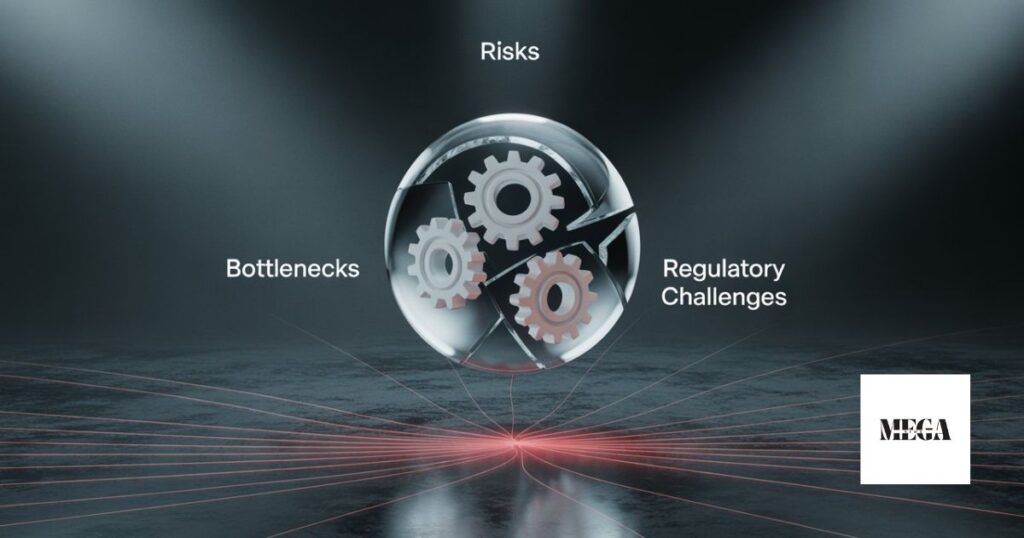
- Regulation and Unplanned Societies: There are numerous unplanned projects in real estate or other poorly approved projects without the right infrastructure or facilities. The rise of unregulated societies is a threat to consumers. This is what the draft housing policy is aimed at.
- Cost Increase in Construction Materials: The prices of cement, steel, labor, fuel etc. keep varying, and this means that the project will experience unexpected cost increases which will either slow the completion process or will cause projects to be sold at a higher price.
- Interest Rates and Macro-Economic Instability: Although the rates have been reduced, inflation, rupee depreciation and fiscal deficits are a threat to the long term stability in real estate investment. Borrowing costs, taxes and policy uncertainties may change very fast.
- Transparency and Documentation Problems: There are still no consistent standards in transfer of land, plot approvals, legal titles etc. These increase the risk to the buyer particularly non-local or overseas.
- Environmental / Infrastructure Constraints: New or peripheral developments are likely to have poor water, electricity and waste disposal, and transport connectivity. These are being attempted through sustainable projects yet most of them remain behind.
Cities & Regions: Hotspots and Differences.
- Lahore: Luxury buildings, green projects, vertical residential areas, and locations that are closely related to the construction of new roads and infrastructure. Increased demand in the suburbs and even in the gated communities.
- Karachi: Mixed trends. In housing societies, gated enclaves, commercial plots there is high demand. Yet is also an oversupply problem with certain luxury projects; infrastructure is still a problem particularly in the peripheral areas.
- Islamabad / Rawalpindi: The high-end and upper-middle classes are in action. Well-amenities housing and apartments. Land supply is however more limited; the prices of centrally located land are high.
- Smaller/Secondary Cities (such as Faisalabad, Sialkot etc.) These are slowly receiving focus particularly in low-cost housing, plots or mixed-use development. There are also some luxury late projects which offer relatively cheaper prices compared to leading cities.
What’s New / Emerging in 2026?
- New policy implementation: There will be a significant number of new policies implemented in new provinces: Housing policies previously in draft (e.g. National Housing Policy) may be enacted, or may be approved, leading to more clarity.
- The subsidies and low-interest loan policies can be refined, increased in size and made more available. Especially among small units (3-, 5-marla houses) and first-time buyers.
- While some of these can be short-term, the models of financing can change: the government and the private sector share risk, bank financing is guaranteed, some initial taxes are not imposed on some projects, developer prices are more transparent.
- There is an ongoing increase in the use of technology: virtual tours, online registration, approvals digitization, potentially blockchain transactions used in some projects.
- Sustainability will become less of a luxury, more of a mainstream element of housing societies and high-end projects: solar power, green belts, water conservation, energy saving building regulations.
Impacts on Investors & Buyers

- Prime location (well-infrastructure, gated communities, closeness to transport) will probably remain profitable to investors. However, speculative plots / unapproved societies are riskier.
- These policy changes (tax relief, subsidies) are a hope for the homebuyers and more so the middle-income bracket. The purchase decisions, however, have to take into account the hidden costs: utility supply, development fee, legal title certainties, maintenance, etc.
- There is a high likelihood that overseas Pakistanis might continue to play a significant role, under incentive, sentiment, and favorable exchange rate dynamics.
- Those developers capable of providing quality, amenities, approvals and sustainable infrastructure will be at competitive advantage. The most important things will be speed, transparency and control of costs.
Conclusion
Pakistan real estate market is at a crossroad in 2025/2026. Government-supported policy interventions, taxation reform, interest rate cut-offs and subsidies give good indications of revival. Meanwhile, structural problems are still present such as affordability crisis, unplanned housing, infrastructure disparity, and inconsistency of regulations.
To people who have good information, disciplined planning, and realistic expectations, opportunities exist in large numbers, particularly in low affordable housing, sustainable developments, and mix-use/residential developments in the expanding suburban areas. However, to the unsuspecting, there is always danger: it may upset returns due to legal ambiguity, speculative pricing, delays, and unnoticed expenses.
FAQ
Q1: Is it a good time to invest in property in 2025–2026?
Yes, due to tax relief, subsidized loans, and stable prices, but only in approved projects.
Q2: What new policies are introduced for real estate?
Tax cuts, National Housing Policy 2025 draft, and subsidized housing loans for 3- and 5-marla houses.
Q3: How much will property prices rise in 2025–2026?
Expected growth is 8–10% on average; 15–20% in premium areas like DHA and Bahria Town.
Q4: What challenges still affect the market?
High construction costs, unregulated housing societies, and affordability issues.